One of tailoring's smallest details has a surprisingly big history.
Button placement is one of the oldest surviving conventions in tailored clothing. Traditionally, men's garments fasten left-over-right, while women's garments fasten right-over-left. This distinction appears across shirts, jackets, trousers, waistcoats, overcoats, and many other tailored pieces. Men's trousers, for example, traditionally close with the left side crossing over the right; women's trousers reverse that orientation. [1]
Today, most clients rarely think about closure direction. Yet these conventions remain deeply embedded in suiting, shirting, outerwear, manufacturing standards, luxury tailoring, and consumer expectations. For custom clothiers and bespoke professionals, understanding where these details came from helps explain why certain constructions still read as masculine, feminine, traditional, luxurious, or sartorially "correct."
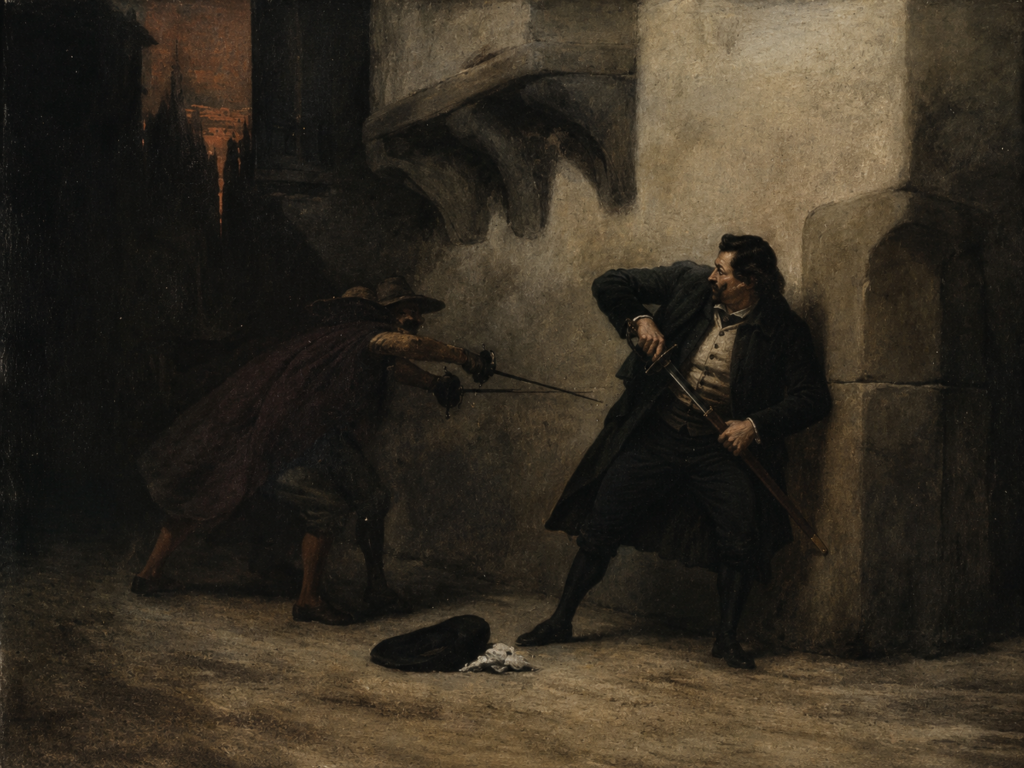
What makes the distinction especially interesting is that many of the original practical reasons disappeared centuries ago. Few modern clients carry swords, and few are dressed by servants. Still, the convention remains because tailoring traditions often outlive their original function.
One common assumption is that men's and women's garments have always buttoned opposite ways. In reality, the distinction became standardized much later than many people realize.
Buttons became fashionable in Europe during the 13th and 14th centuries, especially after reinforced buttonholes allowed garments to be fitted more closely to the body. Early tailored garments, including men's doublets and coats, used closure systems that are still recognizable in modern clothing. [2]
However, surviving garments suggest that women's clothing did not consistently fasten opposite to men's clothing throughout early European fashion history. In many examples from the 16th through early 18th centuries, women's garments fastened in the same direction as men's.
The modern distinction appears to have become firmly codified during the mid-to-late 19th century, alongside the Industrial Revolution, the rise of department stores, standardized sizing systems, and the expansion of ready-to-wear manufacturing. As clothing production became more industrialized, opposite closure orientations offered a quick way to separate menswear and womenswear during patternmaking, production, merchandising, and retail sorting. [3]
For modern made-to-measure (MTM) and bespoke professionals, this matters because it shows how tailoring traditions often survive not only because of function, but because industrial standardization turns convention into expectation. [1]
Women's closure orientation is usually traced to a particular social structure: aristocratic dressing rituals and domestic service.
Among wealthy European women during the Renaissance through the Victorian era, dressing was often a collaborative process. Complex garments involving corsetry, layered skirts, stays, hooks, and decorative closures frequently required assistance from ladies' maids. Because most servants were right-handed, placing buttons on the wearer's left side made fastening garments easier for the person dressing them.
Unlike menswear, which evolved heavily around autonomy and movement, women's clothing often evolved around ceremony, ornamentation, social presentation, and class display. As women's fashion expanded into tailored jackets, riding garments, and eventually trousers, the same directional standards carried across categories. Women's pants inherited the right-over-left orientation historically associated with bodices and jackets. [4]
Buttons themselves also carried status. Before industrialization, buttons were expensive handcrafted objects made from materials such as ivory, pearl, bone, shell, metal, or fabric-covered molds. Garments with many buttons signaled wealth and refinement. A woman whose clothing required help to fasten also displayed access to leisure and domestic labor.
This relationship between craftsmanship and status still resonates in luxury clothing today. Clients continue to associate hand-finishing, horn buttons, functional cuffs, and bespoke details with exclusivity, even when the original practical need has faded.
The divergence between men's and women's closures reflects broader cultural expectations about gender.
Historically, men's garments emphasized movement, durability, utility, military readiness, and independence. Women's garments emphasized ornamentation, domesticity, social display, restricted movement, and ideals of femininity. [4]
For clothiers, this is an important reminder: tailoring has never been culturally neutral. Garment construction has always reflected the values, hierarchies, and assumptions of its time.
Even today, clients often use clothing to communicate authority, softness, power, elegance, confidence, tradition, rebellion, or identity. Tailoring remains one of the most socially symbolic forms of dress.
The sword-and-servant explanations are the most common, but they are not the only theories. Historians have suggested several additional influences.
Some argue that right-over-left women's closures may have supported nursing, allowing a woman holding an infant in her left arm to unfasten garments more easily with her right hand. Others point to side-saddle riding, where women often faced toward the right; the female closure direction may have helped reduce wind exposure while riding.
Fashion mimicry also played a role. Aristocratic dress conventions often spread downward through society and became normalized across classes. Industrial standardization then reinforced these differences by turning gendered closures into a manufacturing and merchandising system. Over time, closure direction became a subtle visual marker separating masculine and feminine garments.
No single theory fully explains the convention. The distinction likely evolved through overlapping influences: military practicality, domestic service, horseback riding, class signaling, fashion imitation, and industrial production. [1]
By the 19th century, industrial manufacturing transformed tailoring from an artisanal practice into a scalable industry. At that point, consistency became more important than original function.
Factories needed standardized patterns. Retailers needed clear categories. Consumers expected familiar construction. The same closure logic used for shirts and jackets expanded into trousers and other garments, even when no practical need remained.
Once these conventions entered manufacturing systems, they became self-perpetuating. This is true of many tailoring details still preserved in bespoke and MTM clothing: surgeon's cuffs, ticket pockets, military-inspired lapels, hand-padded canvassing, and gendered closure orientation.
These details endure because they signal heritage, craftsmanship, and authenticity. In luxury tailoring, clients are often investing not only in fit, but in continuity with a larger sartorial tradition. [2]
Women's closures are only half the story, though. Menswear followed a very different path, one that runs through swords, saddles, and battlefields.
Next in the series: Part 2, The Military Roots of Menswear →
Sources
[1] Smithsonian Magazine, "Men's Shirts Button on the Right. Why Do Women's Button on the Left?" https://www.smithsonianmag.com/smart-news/mens-shirts-button-on-the-right-why-do-womens-button-on-the-left-180957361/
[2] Encyclopaedia Britannica, "Button | History, Materials & Fashion." https://www.britannica.com/topic/button-clothing-accessory
[3] Fashion History Timeline (FIT), "Compartment Couture: New York City Department Stores 1850–1930." https://fashionhistory.fitnyc.edu/compartment-couture/
[4] The Metropolitan Museum of Art, "Riding coat, British, ca. 1760." https://www.metmuseum.org/art/collection/search/81754